
The stadium lights in Rabat burned like suns, casting long shadows across the pitch. Morocco, the proud host, stood on the brink of glory. Senegal, fierce and unyielding, refused to bow.
A whistle pierced the air — a penalty for Morocco. The crowd erupted, not in joy, but in fury. Fans clashed with security, voices rose like thunder, and for a moment, football itself seemed lost in the storm.
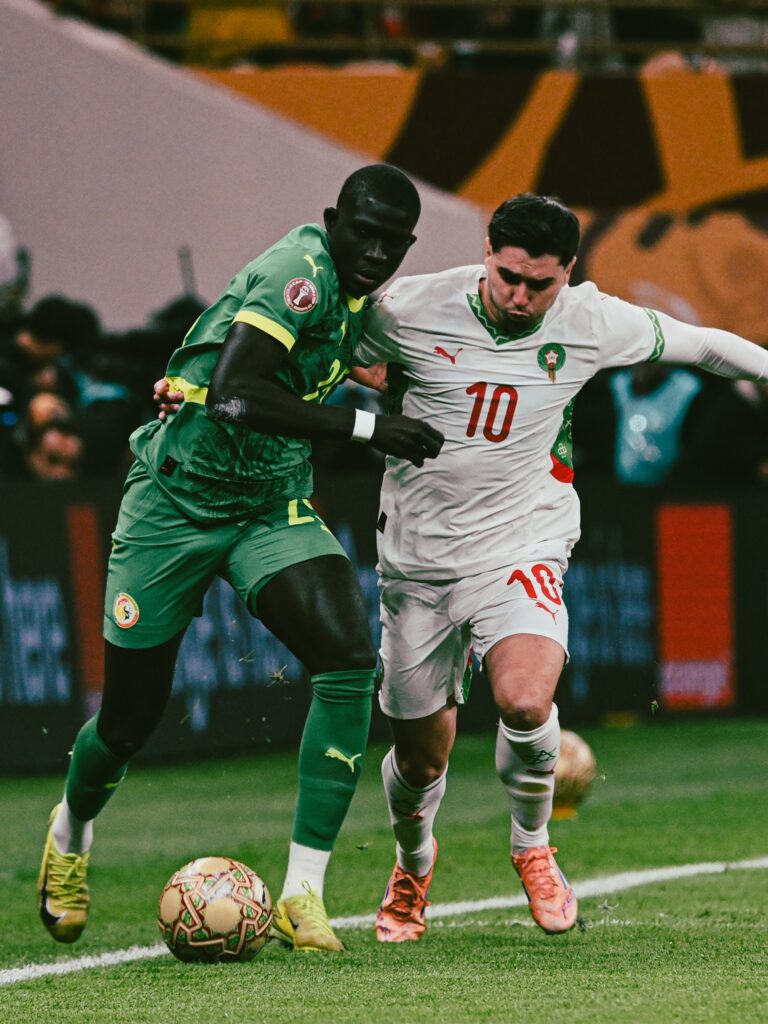
Senegal’s players walked off, their protest heavy with defiance. Yet destiny pulled them back. The game resumed, but not without fire. Towels were tossed, tempers flared, and the pitch became a battlefield of wills.
Then, in extra time, amid the chaos, Pape Gueye found his moment. His strike was clean, unstoppable — a blade cutting through the madness. The net rippled, and with it, Senegal’s fate was sealed.
The final whistle blew. Morocco wept, Senegal roared, and CAF condemned the scenes that had scarred the night. But for Senegal, it was more than victory. It was resilience, a triumph carved from turmoil, a reminder that even in chaos, champions rise.
At the heart of it all was Sadio Mané, his eyes gleaming as he received the Golden Ball. He had carried Senegal with courage, his every touch a reminder of why he was their talisman.
Across the pitch, Brahim Díaz of Morocco clutched the Golden Boot. Though his team had fallen, his five goals had carved history — the first man to score in five consecutive AFCON matches. His pride was bittersweet, but undeniable.
Then came Edouard Mendy, Senegal’s wall between the posts. His penalty save against Díaz in the final was the heartbeat of victory. The Best Goalkeeper award was his crown, and the crowd knew it.
Young Lamine Camara stood shyly as he was named Best Young Player. The future of Senegal shone in his smile, a promise that this triumph was only the beginning.
And when Pape Gueye was honored for the Goal of the Tournament, the stadium remembered that thunderous strike — the goal that silenced chaos and sealed destiny.



No comment yet, add your voice below!